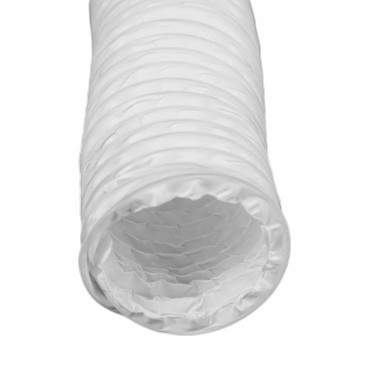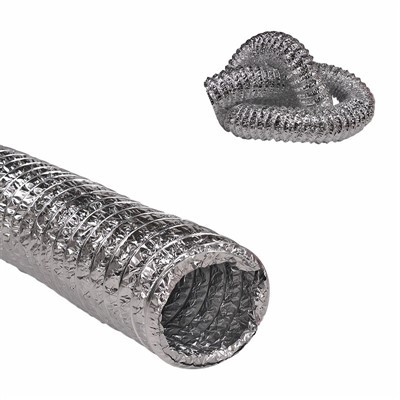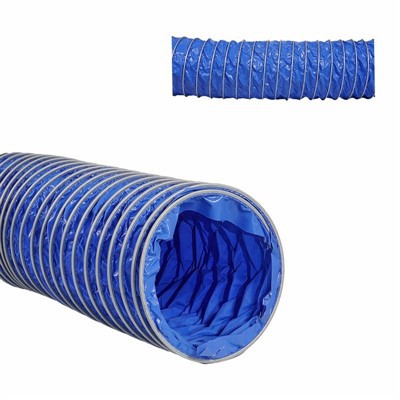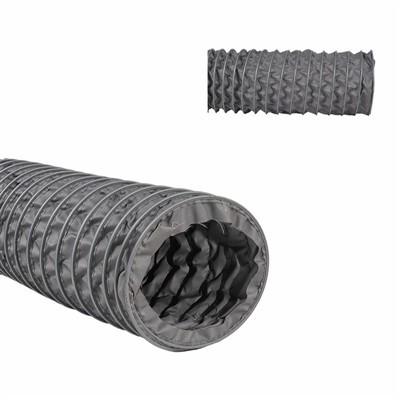

As a PVC air duct supplier, I often encounter questions from customers about whether PVC air ducts need to be insulated. This is a crucial topic that can significantly impact the performance, energy efficiency, and overall functionality of ventilation systems. In this blog post, I'll delve into the science behind insulation for PVC air ducts, explore the scenarios where insulation is necessary, and provide insights to help you make an informed decision.
Understanding the Basics of PVC Air Ducts
PVC (Polyvinyl Chloride) air ducts are widely used in various ventilation applications due to their durability, flexibility, and cost - effectiveness. They are commonly found in residential, commercial, and industrial settings for tasks such as exhaust, intake, and circulation of air. PVC air ducts come in different sizes, thicknesses, and configurations to meet diverse requirements.
However, PVC has certain thermal properties that need to be considered. It is a relatively good thermal conductor compared to some other materials. This means that heat can transfer through the walls of PVC air ducts more easily, which can lead to several issues in different situations.
Reasons for Insulating PVC Air Ducts
1. Energy Efficiency
One of the primary reasons to insulate PVC air ducts is to improve energy efficiency. In heating and cooling systems, the air flowing through the ducts is often at a different temperature from the surrounding environment. Without insulation, heat can be lost or gained as the air travels through the ducts.
For example, in a cold climate, warm air being distributed from a heating system will lose heat to the cooler surroundings if the ducts are not insulated. This means that the heating system has to work harder to maintain the desired temperature in the space, leading to increased energy consumption and higher utility bills. Conversely, in a hot climate, cool air from an air - conditioning system will absorb heat from the environment, reducing the effectiveness of the cooling and again increasing energy usage.
2. Condensation Prevention
Condensation can occur when warm, moist air comes into contact with a cold surface. In the case of PVC air ducts, if the air inside the duct is at a different temperature from the outside air, and the duct is not insulated, condensation can form on the inner or outer surface of the duct.
Inner condensation can lead to water accumulation inside the duct, which can cause corrosion, mold growth, and damage to the duct itself. Outer condensation can drip onto building materials, potentially causing damage to ceilings, floors, or other structures. Insulating the ducts helps to maintain a more consistent temperature on the duct surface, reducing the likelihood of condensation.
3. Noise Reduction
Insulation can also act as a sound barrier. Air moving through the ducts can create noise, especially at high velocities. Insulating the PVC air ducts can help to dampen this noise, creating a quieter environment. This is particularly important in settings such as offices, hospitals, and residential areas where noise pollution can be a significant concern.
Scenarios Where Insulation is Necessary
1. HVAC Systems in Unconditioned Spaces
In heating, ventilation, and air - conditioning (HVAC) systems, if the PVC air ducts are installed in unconditioned spaces such as attics, crawl spaces, or basements, insulation is highly recommended. These areas are often subject to significant temperature variations, and without insulation, the air in the ducts will quickly lose or gain heat.
For instance, in an attic during the summer, the temperature can reach extremely high levels. If the PVC air ducts carrying cool air from the air - conditioning system are not insulated, the cool air will heat up before it reaches the living spaces, reducing the efficiency of the system.
2. Ducts Carrying Hot or Cold Air over Long Distances
When the air has to travel a long distance through the PVC air ducts, insulation becomes crucial. The longer the distance, the more opportunity there is for heat transfer to occur. Insulating the ducts helps to minimize this heat transfer and ensures that the air reaches its destination at the desired temperature.
3. Environments with High Humidity
In areas with high humidity, such as coastal regions or industrial facilities where moisture is present, insulation can prevent condensation on the PVC air ducts. As mentioned earlier, condensation can lead to a variety of problems, and insulation can be an effective solution to mitigate these issues.
Types of Insulation for PVC Air Ducts
There are several types of insulation materials that can be used for PVC air ducts. Some common options include:


- Fiberglass insulation: It is a popular choice due to its good thermal insulation properties and relatively low cost. Fiberglass insulation can be wrapped around the ducts and is available in different thicknesses.
- Foam insulation: Foam insulation provides excellent thermal insulation and is also effective in reducing noise. It can be applied in the form of pre - formed sleeves or sprayed onto the ducts.
Our Product Offerings
As a PVC air duct supplier, we offer a wide range of products to meet your ventilation needs. In addition to our high - quality PVC air ducts, we also provide related products such as Transparent PU Copper - coated Suction Hose, Ransparent PU Copper - plated Dust Hose, and 0.6mm PVC Suction Air Duct Hose. These products are designed to work in harmony with our PVC air ducts and can enhance the overall performance of your ventilation system.
Making the Decision
Whether or not to insulate your PVC air ducts depends on several factors, including the specific application, the environment in which the ducts are installed, and your budget. If you are unsure, it is advisable to consult with a professional HVAC technician who can assess your situation and provide expert advice.
If you are looking for high - quality PVC air ducts and related products, we are here to help. Our team of experts can assist you in selecting the right products for your needs and provide guidance on insulation options. We are committed to providing excellent customer service and ensuring that you get the best value for your investment.
Contact Us for Procurement
If you are interested in purchasing our PVC air ducts or any of our related products, we encourage you to reach out to us. We are eager to engage in procurement discussions and help you find the perfect solutions for your ventilation requirements. Whether you have a small residential project or a large - scale industrial application, we have the products and expertise to meet your needs.
References
- ASHRAE Handbook - HVAC Systems and Equipment. American Society of Heating, Refrigerating and Air - Conditioning Engineers.
- "Duct Insulation: A Guide for Energy Efficiency." Energy Star.
- "Thermal Insulation for HVAC Ducts." Building Science Corporation.