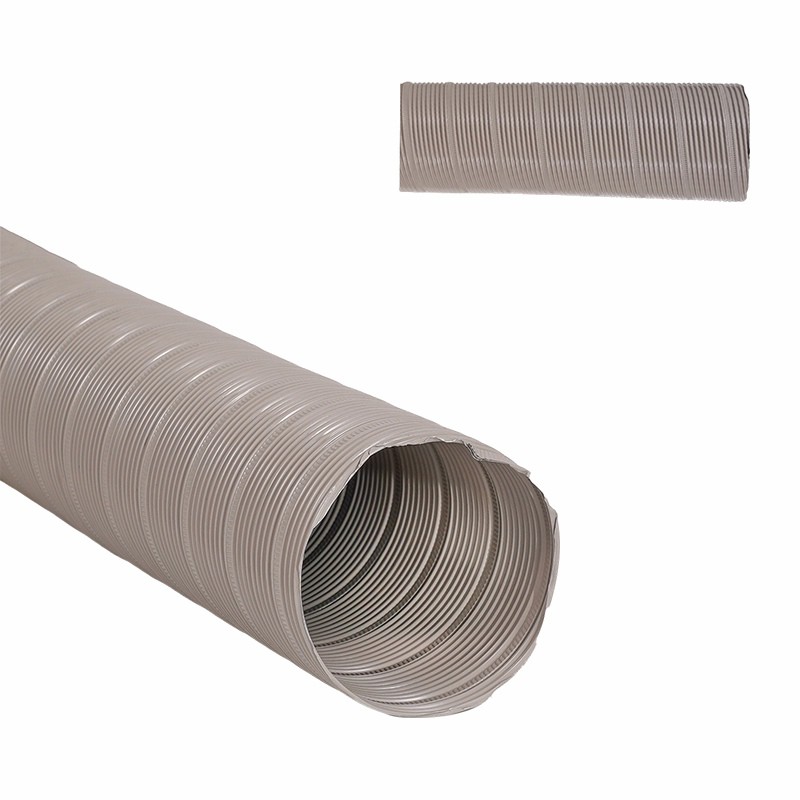
1. Material and Tool Preparation
Prepare aluminum foil ducts, t-connectors, aluminum foil tape, scissors, a measuring tape, and a utility knife. Ensure the materials are compatible and of acceptable quality.
2. Measurement and Cutting
Measure the required length of the duct using a measuring tape. Cut the duct to the t-connector dimensions, ensuring a clean, burr-free cut. Leave a small allowance when cutting to avoid insufficient insertion length.
3. Cleaning the Connection
Wipe the connection between the duct and the t-connector with a dry cloth to remove dust and oil stains. Ensure the contact surface is clean and free of debris to prevent affecting the seal.
4. Insertion and Connection
Smoothly push one end of the duct into the t-connector, reaching a depth of 2/3 of the connection length or aligning with the markings on the fitting. Avoid bending or scratching the aluminum foil layer during this process.
5. Sealing Treatment
Wrap aluminum foil tape spirally around the joint 2-3 times. The first layer should cover the gap and be pressed firmly. Subsequent layers should cover half the width of the tape. Keep the tape flat while wrapping, avoiding wrinkles or air bubbles.
6. Reinforcement Inspection
Gently pull the duct to test for looseness and observe whether the edges of the tape are curled up. If air leakage or displacement is found, re-wrap the tape or adjust the insertion depth to ensure a secure and tight seal.