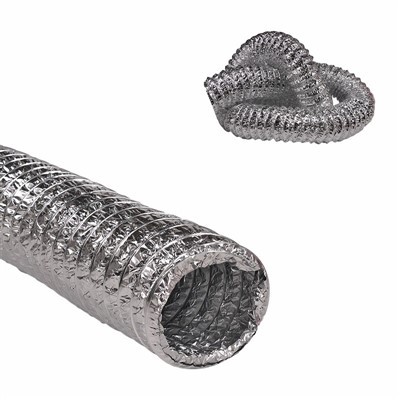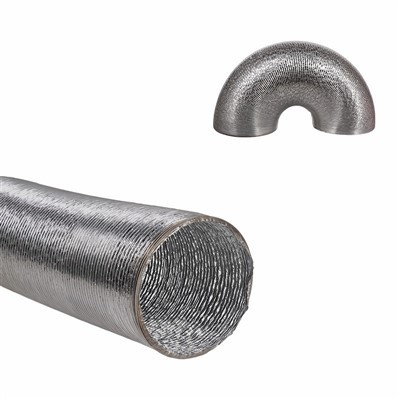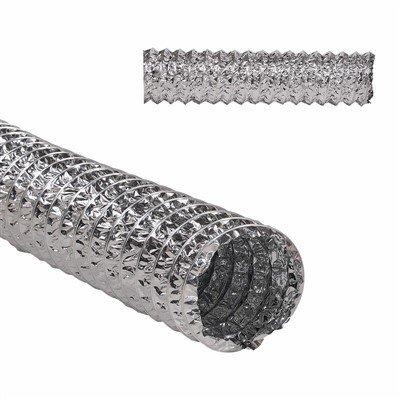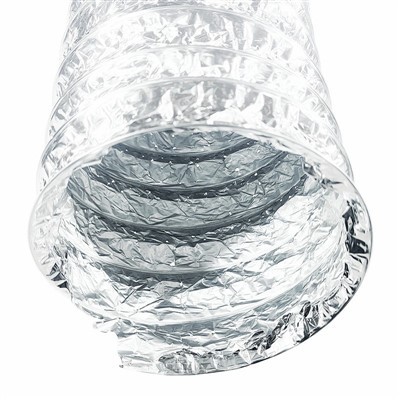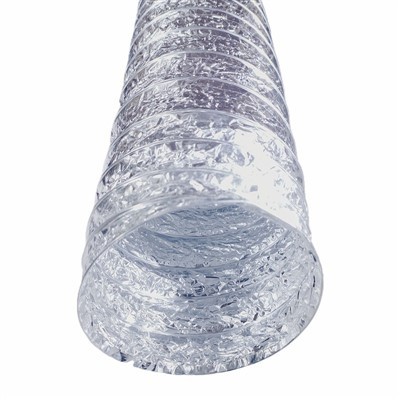
The main differences between PVC and metal air ducts can be summarized as follows:
Material and Weight
- PVC Air Ducts: Made of high-molecular-weight polyvinyl chloride (PVC), they are lightweight. This material makes PVC air ducts easier to relocate, operate, and install.
- Metal Air Ducts: Typically made of galvanized iron, stainless steel, or aluminum alloy, they are heavier. Metal air ducts have higher compressive strength and durability.
Corrosion and Heat Resistance
- PVC Air Ducts: Excellent corrosion resistance, not easily affected by the environment, and can be used in applications involving corrosive gas emissions and the transport of strong acid and alkali media. However, their heat resistance is relatively low, making them unsuitable for high-temperature applications.
- Metal Air Ducts: Also have excellent corrosion resistance, allowing for long-term use in humid and corrosive environments. Furthermore, metal air ducts are heat-resistant and can be used for extended periods in high-temperature environments without deterioration or aging.
Processing and Installation
- PVC Ducts: Easy to process and install, with excellent processing performance, easy to cut, assemble, and install. This reduces installation time and costs.
- Metal Ducts: Relatively complex manufacturing process, higher cost. However, their connection method is more airtight, ensuring no gas or liquid leakage.
Performance Characteristics
- PVC Ducts: Good insulation performance, can be used in some high-voltage applications; low noise, improving the working environment for employees; energy-saving and environmentally friendly, effectively reducing energy loss and lowering the energy consumption of air conditioning equipment. However, poor pressure resistance, shorter service life, and susceptibility to ultraviolet radiation.
- Metal Ducts: High strength, good wear resistance, and high permeability, allowing ventilation systems to operate for extended periods without maintenance. However, they are prone to noise generation, static electricity discharge, and are difficult to maintain.
Application Areas
- PVC Ducts: Due to their lightweight, corrosion resistance, and ease of installation, suitable for applications requiring small air volumes, low temperatures, and short-distance transmission.
- Metal ducts: Due to their durability, fire resistance, resistance to deformation, and high-temperature resistance, they are suitable for applications requiring high temperatures, large air volumes, and long-distance air transmission.
Cost
- PVC ducts: Lower manufacturing costs and relatively inexpensive, making them suitable for applications with limited budgets.
- Metal ducts: While relatively more expensive, their longer lifespan and stability offer long-term economic benefits.